My academic semester officially ended on Monday, when I took my last final exam. Hoping for the best on that one. In any case, most of the other international kids have now left. It was a bit weird, seeing everyone off. Everyone went out on Monday night and people were getting all emotional... it's not that I won't miss some people, but it didn't really affect me in the same way I guess. There are several people who I'll absolutely attempt to stay in touch with and see again, and I'm fully confident that this won't be too difficult in the age of facebook, skype, and relatively cheap airfare. And out of the three kids I did most of my traveling with, two also go to Georgetown, and one lives across the Potomac in Vienna, VA, so I can probably expect to see them around. For some of the other kids who've now left, I hope they go on to have nice lives.
But the long and the short is that several people who I saw as recently as Monday night are now back in America. Not me. When I booked my flight to NZ last spring, I planned to leave myself a few weeks at the end, and now I'm milling around New Zealand on my own for a bit. I've got a friend from my old school coming in from Australia in about 10 days, and we're going to travel around the South Island again during my last week here -- looking forward to that one. In the meantime, however, I had to find myself something to do, and today I finished my third day of work here on beautiful Waiheke Island.
Waiheke is about an hour's ferry ride from Auckland, and is a popular tourist destination. At the beginning of the semester, I spent a day out here tasting wine and causing trouble. At the time it was actually my first trip outside of Auckland... amazing how things come full circle in that way. Anyway, about three weeks ago a friend loaned me her World Wide Opportunities on Organic Farms (WWOOF) guide for New Zealand. The way WWOOF works, essentially, is that people with some sort of credibility as organic farmers or gardeners list themselves in the guide, and then wayward travelers like me contact them. And in exchange for four hours of labor each day, "wwoofers" like myself get free housing and food. I figured Waiheke would be a nice place to spend a bit of time, so I sent out a few emails to people in the WWOOF guide, and was able to work out an arrangement to work for a retired couple with a beautiful plot of land overlooking some mountains and parts of the surrounding ocean.
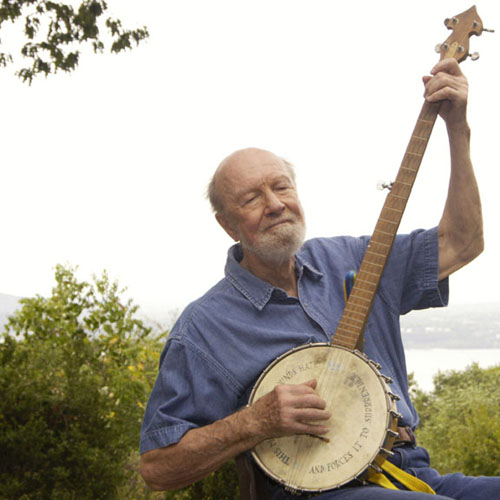
Another guy came out here the same day as me, and the two landowners have mostly got us cutting up and splitting firewood for their wood-burning stove. The lady of the house, a native New Zealander, does most of the gardening, while the guy, an Australian import, generally works in the yard with us. At about 4 in the afternoon, they're currently sitting across from me playing scrabble, but each has now regaled me with stories of their multiple world travels. Actually, in a revelation that stands a good chance of winning the M.R.I.T.T.I.A.I.S. (Most Ridiculous Illustration That The World Is Actually Incredibly Small) designation for my time abroad, it turns out that the guy, Trevor, has visited my hometown of Poughkeepsie, NY, and spent some time in the 80s sailing on the Hudson River sloop Clearwater with legendary folk musician and activist Pete Seeger. For anyone reading who I didn't grow up with, I actually went to middle and high school with Pete's granddaughter, and I met Mr. Seeger on several occasions when he came in about once a year to play his music for us. The Clearwater boat belongs to the Clearwater organization, a local environmental advocacy group founded by Pete. It docks in Poughkeepsie and is basically a Hudson River institution, putting on many educational programs while the organization works on the river's behalf and puts on an annual music and environmental festival. Like many other local grade school children, I sailed on the boat myself with my fourth grade class.
So you can imagine my amazement when Trevor revealed that he, too, had sailed on the Clearwater before I was even born. I guess he met Pete while traveling on a cross-country march for global nuclear disarmament -- they spent nine months walking across the US, which is pretty remarkable on its own. Just before the march was over Pete invited "anyone who likes music, or boats" onto the Clearwater and Trevor in turn was introduced to life along the Hudson River. 23 years later and about 10,000 miles from home, I'm now cutting and splitting firewood for his stove.
In doing so I've already become quite well-acquainted with the combination of chainsaw and axe, which is awesome. I'd used a power saw this past summer before coming out here, but there aren't many things more fun than starting a chainsaw. In turn, there are few things more satisfying than driving an axe through a large log. Talk about taking out aggression.
Anyway, before I leave Waiheke I'll be working here for another week or so. They've got a couple of unused mountain bikes, so I've been doing a bit of that in my spare time. The house is about a 25 minute walk from the beach -- thats also been a nice means of unwinding once the workday is over. At some point in the next week, a couple Irish guys I hung out with over the course of the semester will be coming out here as well, which should be fun.
****
It's no secret that people loosen up around alcohol -- that's why President Obama tried to tamp down the recent racial controversy between the white cop and the black Harvard professor by inviting the two for a White House "beer summit." And for better or worse, it seems that there's a lot of cultural exchange associated with drinking. Whether sitting around shooting the breeze or sharing one another's varied drinking games, for college kids from different countries this seems to be especially true. Some of the other American guys and I hung out a bunch the past few months with a group of freshmen New Zealanders, and we each did our best to further this tradition in the waning weeks of the semester.
In the Kiwis' case, it became a lot easier for us Americans to explain the game of baseball once we introduced to them via the drinking game of the same name. This game, as opposed to the actual sport, is modeled after beer pong and involves an arrangement of four red cups in a line on either side of the table. Like in beer pong, players split into two teams, with the team that is "up to bat" taking turns shooting at the cups. Front cup means a single, second one back is a double, third a triple, fourth a home run. For each cup back that is made, the other team has to drink the total sum (i.e. the full four for a home run). While this is going on one player from that other team stands behind the cups that are being shot at -- if the ball hits the rim of the cups and is then caught by the opposing player, it's an out. If the player shooting misses the cups altogether, it's a strike. Three strikes is an out; three outs and the other team bats, just like in real baseball. The score is also kept the same way, and if a player hits a cup and gets on base they can advance as many bases as the next batter who hits a cup. If you've got time, lots of beer, and you're feeling really adventurous you can play nine innings, but frequently the game doesn't quite last that long.
In any event, the New Zealanders could not get enough of this game. At every turn after we introduced it, it was all they wanted to play. When I ran into one of the kids at Burger King late last Saturday night, he told me that they'd even played it on their own that night. But this banner example of the sharing and adoption of different cultural traditions wasn't just a one-way street.
A few nights before, one of the Kiwi kids had mentioned off-handedly that we should all play possum before everyone went home. Curious, my friend Joe asked what differentiated the apparent game of possum from the animal that hangs from trees and is hated throughout New Zealand for decimating the local plant life as an introduced species.
Turns out it's a favorite pastime of some New Zealanders to climb trees. Me too. I'd never thought, however, to include drinking in the equation -- if anything that seemed sort of dangerous. But as New Zealand is blessed with many large trees with thick, low-hanging branches, the Kiwi kids explained to us that in possum, the entire group of participants climbs a tree, and no one is allowed to get down until they have consumed a personal case of beer. If you have to use the bathroom, you'd better find a stable branch. First one out of the tree wins.
Upon hearing of it, Joe and I made it a priority to find some time to play this interesting game. We did end up playing possum last Friday night -- Joe, me, and three of the New Zealanders. In practice, the game wasn't all that much of a game. We basically all just found comfortable spots, played some music from a portable radio, and sat around talking and drinking. It wasn't really all that different from sitting around drinking beer in somebody's living room, except for the fact that we were all sitting in a tree. When all the beer was gone, we climbed down, safely for the most part, although Joe took a bit of a spill. I can't remember who "won" -- to be honest I'm not sure we were even keeping score at that point.
Anyway, that's possum. Between that and baseball, it was easy this past week to feel a bit like a trader from a bygone era, exchanging ideas and traditions with people from far-away places. A couple Saturdays ago we got three Americans, an Irish guy, and six New Zealanders together and played a game of American football, followed my first ever game of touch rugby. Rugby was cool -- it's New Zealand's national sport, and after watching it all semester I finally got to play it for the first time. The Kiwis liked football. I'm used to playing pick-up games in the US, where there's an intense power grab on almost every play for who gets to be the quarterback. But I soon realized that one way to get around that is to play with a bunch of kids who can't throw a spiral. We taught the Kiwis the rules, but we made sure not to teach them too much...
****
I'll probably try to write at least one more post in my last few weeks here, but this one's long enough already. To whoever may be reading back home, have a safe and happy Thanksgiving. If there's one holiday I'm extremely bummed about missing, that would have to be it. Next year I'm eating twice as much turkey.
I'll leave you with a collection of miscellaneous photos I've put together from various recent outings:
Random Auckland Pictures (facebook)
All the best!
Cheers,
Matt
Thursday, November 19, 2009
Thursday, November 5, 2009
Game Six of the World Series
I sat here watching Game 6 of the worst World Series ever the other night, with a couple of Yankee fans and kids from New Zealand that kept asking questions about how baseball works. I hadn't thought much about it, but as a Mets fan I'm actually quite lucky to be so well-distanced from everything going on in the baseball world right now. The only team I hate more than the New York Yankees are the division rival Philadelphia Phillies... needless to say, it's been a tough week, as I spent most of the World Series saying things that I would ordinarily have considered quite blasphemous, like: "I don't hate the Yankees as much as I used to," or, "this is as hard as I've ever rooted for the Yankees. Go New York." And yet as tough as this World Series was to swallow across the world, I'm sure it would have been even more difficult surrounded by a high number of both Yankees and Phillies fans at school. The internet has kept me minimally engaged, but fortunately last night's game was the first game of the 2009 postseason that I actually watched in full.

Yes, it's a depressing time to root for the Mets, and this World Series hasn't made it any easier. Perhaps the biggest driver of my grudging respect for the Yankees this year and through the playoffs has been the fact that, no matter what you want to say about the Yanks buying a championship, they invested in the right players. If you want to prove that money isn't everything in baseball, look no further than the Mets, who with the second-highest payroll in baseball could manage nothing more than a pathetic 70-92 finish this season.
Besides, Mets fans will never be able to stand up to the Yankees in terms of success on the baseball field. We just won't -- the score is now 27-2 in terms of World Series championships... 8-2 since the Mets entered the league in 1962. If you really want to hit a Yankee fan where it hurts, remind them about how their greedy owners tore down an 85-year old piece of baseball history (the real Yankee stadium), in order to build an ugly, tacky replica with nothing additional to offer except more luxury boxes and some nice sushi restaurants for rich people with $300 box seats. I kept reminding both Yankee fans next to me how much better this World Series would have been had it been played in the old stadium.
But apart from the six little pieces of me that died inside this past week, one for each agonizing game of this World Series from hell, Game 6 was actually somewhat enjoyable to watch. As much as I normally root for the collective agony of Yankees fans everywhere, I actually felt good for my two friends -- far from bandwagoners, these kids are legitimate lifelong fans -- who were watching next to me and got to see their team win. Much better than Phillies fans, anyway, who would have been even more insufferable after winning a second straight title. Beyond that, it was kind of fun sitting around explaining baseball to a couple of kids who got the main idea but are far more used to watching cricket, even if it's a bit of a shame that their first introduction was a Yankees World Series victory. I even learned a few things about cricket in the process, as we compared the various similarities and differences between the two distant cousins throughout the game.
In any case, I'm glad this whole World Series thing is over. In a baseball season that started with some reservations on my part that I might be out of the country for that relished Mets championship run, I was disabused of any such notions by June, and in the end my location in far-away New Zealand became a very fortunate means for maintaining my sanity while my two most hated teams battled it out. With little pain, I even got my preferred outcome. Congratulations to the 2009 New York Yankees.
Perhaps, given my distance from it all, the 2009 baseball season can be written off as nothing more than a bad dream, a nightmare that served as a disturbing but fortunately minor blight on an otherwise great trip to a beautiful part of the world. This one should be a little easier to erase from my memory.
At least I'll keep telling myself that.
****
There's nothing to take your mind off a terrible World Series like a trip to the beach, and one way I was able to avoid following Games 4 and 5 was by traveling up north again to the Bay of Islands for an "overnight cruise" aboard New Zealand's finest oceanic hostel, The Rock. A converted houseboat, the Rock has been transformed by a husband and wife into the floating headquarters for a 22-hour trip in which you basically do as many things as you can that involve the ocean.
The Rock is quite spacious, actually -- the top level has sleeping space with capacity for around 40, including crew. The bottom level features a bar, a small dinner and lounging area, space for kayaks, fishing poles, and other supplies, and even a pool table at the front. Pool is not necessarily the best game for a boat, but the water was fairly calm and the balls stayed in place quite well despite the occasional swell which made for a few interesting shots, and a new wild card for any balls lingering too close to the pockets. We cruised out to our mooring, fishing in the process but not catching anything. Once we were anchored we fished for another couple hours... a few people caught small fish, but nothing significant. The idea was to catch some red snapper, apparently fairly abundant in the Bay of Islands, to then eat for dinner. Some guy lured a small shark, but we couldn't really eat that either, so the crew went to the backup plan and put some steaks on the grill for everyone.
We got into some kayaks after dinner and paddled around for a bit. It was a cloudy night, but the water was about as calm as the ocean gets and gradually the moon, full if not close to it, rose high enough to escape the low cloud cover. After a bit of kayaking and some after-dinner drinks, we all turned into our small bunks pretty early, falling asleep to the gentle movement of boat on water. Apparently it can get pretty rowdy aboard the Rock, but we went on a Monday night and the majority of the other passengers were either couples or older, more middle-aged folks, so things remained calm like the ocean that night and we went with it.
If you've never seen a sunrise at sea, I'd highly recommend it. When I awoke at about 6:30 Tuesday morning and walked out onto the deck, it was actually the second time I'd seen the sun rise over the ocean since coming to New Zealand. It had been overcast the first time, and there were a few clouds out Tuesday morning as well, but the sun eventually filled the sky and the water's reflection with a brilliant shade of orange as the day began. We put a few more fishing lures in the water, commencing what may have been the most peaceful morning of my life. Rod in hand, casting off the back of the boat with a cup of tea and the sun steadily emerging in the sky, I stood there quietly and took in the sights and sounds of a new day. Seeing the world in such a state of profound peace was an inspiring reminder that even with my two least favorite teams battling out to be the World Champion of my favorite sport, things are never as bad as they may sometimes seem.
I didn't catch any fish that morning either, but that wasn't really the point. We ate breakfast shortly after sunrise and the boat left its overnight spot, taking us to the small rock where we were to go snorkeling and diving for mussels. The water was a little rough, and apparently there's also a bit of an algae problem in the Bay of Islands, so you couldn't really see much in the way of fish or other cool marine life. It was also freezing. I grew up taking family vacations to Maine, where the ocean in the summer might hit 70 degrees on a good day. They also gave us wetsuits. But it was still freezing.
Still, diving for mussels was probably one of the most satisfying things I've done recently. I normally don't have much patience for any sort of diving -- I've got poor breath control, and I'm not a very good swimmer. But you can often find mussels attached to rocks just below the ocean's surface, and as I braced myself against the large snorkeling rock with one hand, I atoned for my failures as a fisherman by pulling off mussel after mussel with the other. Mussel "diving" included very little actual diving, which suited me nicely. By the time I was done I alone had probably pulled off close to a dozen mussels... clearly I was quite proud of myself.
Around 1 o'clock we anchored at our next spot, a short kayak's paddle away from a large uninhabited island with a couple of hiking trails. Though it's now uninhabited, supposedly this island was actually the sight in the early 1800s of a series of events that ultimately led to New Zealand's first official public execution.
When the British first came to New Zealand, the Bay of Islands was an important point of interaction between Europeans and Maori. The legend in this case goes that there was a British fisherman who brought his family out to this small, isolated island and built them a house. When the fisherman was tragically lost at sea, his family was left without a provider, or anyone else to do the tough tasks necessary to survive in such isolation. Eventually, the man's wife was assisted by two men, one British and one Maori, who fished for food and helped the family in their daily living while she cared for the children. The arrangement worked out well for a time, but eventually the Englishman, a gruff seafarer type with a lust for women and alcohol, began bullying the Maori man and pushing him around. The Maori man apparently couldn't take it anymore one day and drove an axe into the back of the Englishman's head. From there he essentially went crazy, burning down the British family's house with the mother and children inside after she objected to the axe he put in the back of the Englishman's head. When one of the children escaped, he chased the boy, killed him with another axe to the head, and threw him off the highest point of the island.
Here's where the public execution part comes in: at this point the Maori man may have felt he was in the clear, but many other local chiefs had seen the smoke rising from the island as the house burned, and upon paddling their canoes to the island to investigate, soon found out what had happened. Fearing that the situation could be damaging to the cooperative relationship British and Maori had cultivated in the Bay of Islands during that time, the chiefs decided to turn the Maori man into the authorities, which resulted in his ultimate hanging some number of weeks later in the fledging city of Auckland.
This story may or may not be true, but it certainly came from somewhere, and it made for some good entertainment as one of the crew members shared it with us while we stood at the top of the island's highest hill, from which the Maori man is alleged to have thrown the British boy. The site where the family's house supposedly stood is now a flat grassy area that certainly looks like it could have once had a structure on it.
In any event, the lookout at the top of the island was absolutely magnificent. You could see straight out the mouth of the bay... if you follow that course long enough, you'll find yourself somewhere on the far northeast coast of Russia.
We came down from the lookout, got back in the kayaks, and returned to the Rock. From there it was time to cruise back to shore in Paihia, but on the way back the crew cooked up all the mussels we had caught earlier in the day, and I learned that sea urchins are in fact edible. The process of eating a sea urchin might seem a bit grotesque, if it involved a species that most people know is alive -- sea urchins are those ovular things that are covered in hedgehog-like spikes... you've probably seen one if you've ever been to a rocky beach. After catching a sea urchin, which continues to move its spiky legs even after being removed from the water, one proceeds by driving a knife into the hole at the top (its mouth), tearing the shell apart, and eating the eggs on the inside. It sounds disgusting, but they're actually quite good.
At any rate, we got back to the wharf at Paihia after a little over the promised 22 hours, and drove back to Auckland with a car full of satisfied, World Series-escaping customers. Game 5 was being played as we drove back -- had the Yankees won that game, I would have missed the end of the series altogether, which would have been the best possible scenario. As fate would have it, however, the Phils extended the Fall Classic for one more game, and I ended up sitting in my room on Thursday night here, watching Game 6 on an mlb.com live webcast. With a couple of Yankee fan friends, it was like being forced to watch a car wreck in slow motion, in that I probably wouldn't have put myself through the agony ordinarily.
Perhaps it was good that I got away for a night and day, in order to prepare myself for the trauma of watching these events unfold. As I've mentioned, with this stinker of a baseball season, I'm lucky to have been so far from the action in the first place. I've now survived, though, and I can talk all about my baseball-related feelings. Maybe the Mets will be good next year. Right now, however, if you haven't seen them yet, I've got some pictures of another beautiful place in New Zealand that helped me get through the end of this one:
The Rock overnight cruise (facebook)
It was a great time, and I'd highly recommend it if anyone ever finds themselves out around these parts. Random, I know, but I'm continually surprised how many people in my life are connected somehow to this crazy country, so it's not completely unrealistic that that situation could present itself.
Anyway, to everyone reading, I hope all is well --
Cheers,
Matt
World Series logo image courtesy midwestdiamondreport.com
Yes, it's a depressing time to root for the Mets, and this World Series hasn't made it any easier. Perhaps the biggest driver of my grudging respect for the Yankees this year and through the playoffs has been the fact that, no matter what you want to say about the Yanks buying a championship, they invested in the right players. If you want to prove that money isn't everything in baseball, look no further than the Mets, who with the second-highest payroll in baseball could manage nothing more than a pathetic 70-92 finish this season.
Besides, Mets fans will never be able to stand up to the Yankees in terms of success on the baseball field. We just won't -- the score is now 27-2 in terms of World Series championships... 8-2 since the Mets entered the league in 1962. If you really want to hit a Yankee fan where it hurts, remind them about how their greedy owners tore down an 85-year old piece of baseball history (the real Yankee stadium), in order to build an ugly, tacky replica with nothing additional to offer except more luxury boxes and some nice sushi restaurants for rich people with $300 box seats. I kept reminding both Yankee fans next to me how much better this World Series would have been had it been played in the old stadium.
But apart from the six little pieces of me that died inside this past week, one for each agonizing game of this World Series from hell, Game 6 was actually somewhat enjoyable to watch. As much as I normally root for the collective agony of Yankees fans everywhere, I actually felt good for my two friends -- far from bandwagoners, these kids are legitimate lifelong fans -- who were watching next to me and got to see their team win. Much better than Phillies fans, anyway, who would have been even more insufferable after winning a second straight title. Beyond that, it was kind of fun sitting around explaining baseball to a couple of kids who got the main idea but are far more used to watching cricket, even if it's a bit of a shame that their first introduction was a Yankees World Series victory. I even learned a few things about cricket in the process, as we compared the various similarities and differences between the two distant cousins throughout the game.
In any case, I'm glad this whole World Series thing is over. In a baseball season that started with some reservations on my part that I might be out of the country for that relished Mets championship run, I was disabused of any such notions by June, and in the end my location in far-away New Zealand became a very fortunate means for maintaining my sanity while my two most hated teams battled it out. With little pain, I even got my preferred outcome. Congratulations to the 2009 New York Yankees.
Perhaps, given my distance from it all, the 2009 baseball season can be written off as nothing more than a bad dream, a nightmare that served as a disturbing but fortunately minor blight on an otherwise great trip to a beautiful part of the world. This one should be a little easier to erase from my memory.
At least I'll keep telling myself that.
****
There's nothing to take your mind off a terrible World Series like a trip to the beach, and one way I was able to avoid following Games 4 and 5 was by traveling up north again to the Bay of Islands for an "overnight cruise" aboard New Zealand's finest oceanic hostel, The Rock. A converted houseboat, the Rock has been transformed by a husband and wife into the floating headquarters for a 22-hour trip in which you basically do as many things as you can that involve the ocean.
The Rock is quite spacious, actually -- the top level has sleeping space with capacity for around 40, including crew. The bottom level features a bar, a small dinner and lounging area, space for kayaks, fishing poles, and other supplies, and even a pool table at the front. Pool is not necessarily the best game for a boat, but the water was fairly calm and the balls stayed in place quite well despite the occasional swell which made for a few interesting shots, and a new wild card for any balls lingering too close to the pockets. We cruised out to our mooring, fishing in the process but not catching anything. Once we were anchored we fished for another couple hours... a few people caught small fish, but nothing significant. The idea was to catch some red snapper, apparently fairly abundant in the Bay of Islands, to then eat for dinner. Some guy lured a small shark, but we couldn't really eat that either, so the crew went to the backup plan and put some steaks on the grill for everyone.
We got into some kayaks after dinner and paddled around for a bit. It was a cloudy night, but the water was about as calm as the ocean gets and gradually the moon, full if not close to it, rose high enough to escape the low cloud cover. After a bit of kayaking and some after-dinner drinks, we all turned into our small bunks pretty early, falling asleep to the gentle movement of boat on water. Apparently it can get pretty rowdy aboard the Rock, but we went on a Monday night and the majority of the other passengers were either couples or older, more middle-aged folks, so things remained calm like the ocean that night and we went with it.
If you've never seen a sunrise at sea, I'd highly recommend it. When I awoke at about 6:30 Tuesday morning and walked out onto the deck, it was actually the second time I'd seen the sun rise over the ocean since coming to New Zealand. It had been overcast the first time, and there were a few clouds out Tuesday morning as well, but the sun eventually filled the sky and the water's reflection with a brilliant shade of orange as the day began. We put a few more fishing lures in the water, commencing what may have been the most peaceful morning of my life. Rod in hand, casting off the back of the boat with a cup of tea and the sun steadily emerging in the sky, I stood there quietly and took in the sights and sounds of a new day. Seeing the world in such a state of profound peace was an inspiring reminder that even with my two least favorite teams battling out to be the World Champion of my favorite sport, things are never as bad as they may sometimes seem.
I didn't catch any fish that morning either, but that wasn't really the point. We ate breakfast shortly after sunrise and the boat left its overnight spot, taking us to the small rock where we were to go snorkeling and diving for mussels. The water was a little rough, and apparently there's also a bit of an algae problem in the Bay of Islands, so you couldn't really see much in the way of fish or other cool marine life. It was also freezing. I grew up taking family vacations to Maine, where the ocean in the summer might hit 70 degrees on a good day. They also gave us wetsuits. But it was still freezing.
Still, diving for mussels was probably one of the most satisfying things I've done recently. I normally don't have much patience for any sort of diving -- I've got poor breath control, and I'm not a very good swimmer. But you can often find mussels attached to rocks just below the ocean's surface, and as I braced myself against the large snorkeling rock with one hand, I atoned for my failures as a fisherman by pulling off mussel after mussel with the other. Mussel "diving" included very little actual diving, which suited me nicely. By the time I was done I alone had probably pulled off close to a dozen mussels... clearly I was quite proud of myself.
Around 1 o'clock we anchored at our next spot, a short kayak's paddle away from a large uninhabited island with a couple of hiking trails. Though it's now uninhabited, supposedly this island was actually the sight in the early 1800s of a series of events that ultimately led to New Zealand's first official public execution.
When the British first came to New Zealand, the Bay of Islands was an important point of interaction between Europeans and Maori. The legend in this case goes that there was a British fisherman who brought his family out to this small, isolated island and built them a house. When the fisherman was tragically lost at sea, his family was left without a provider, or anyone else to do the tough tasks necessary to survive in such isolation. Eventually, the man's wife was assisted by two men, one British and one Maori, who fished for food and helped the family in their daily living while she cared for the children. The arrangement worked out well for a time, but eventually the Englishman, a gruff seafarer type with a lust for women and alcohol, began bullying the Maori man and pushing him around. The Maori man apparently couldn't take it anymore one day and drove an axe into the back of the Englishman's head. From there he essentially went crazy, burning down the British family's house with the mother and children inside after she objected to the axe he put in the back of the Englishman's head. When one of the children escaped, he chased the boy, killed him with another axe to the head, and threw him off the highest point of the island.
Here's where the public execution part comes in: at this point the Maori man may have felt he was in the clear, but many other local chiefs had seen the smoke rising from the island as the house burned, and upon paddling their canoes to the island to investigate, soon found out what had happened. Fearing that the situation could be damaging to the cooperative relationship British and Maori had cultivated in the Bay of Islands during that time, the chiefs decided to turn the Maori man into the authorities, which resulted in his ultimate hanging some number of weeks later in the fledging city of Auckland.
This story may or may not be true, but it certainly came from somewhere, and it made for some good entertainment as one of the crew members shared it with us while we stood at the top of the island's highest hill, from which the Maori man is alleged to have thrown the British boy. The site where the family's house supposedly stood is now a flat grassy area that certainly looks like it could have once had a structure on it.
In any event, the lookout at the top of the island was absolutely magnificent. You could see straight out the mouth of the bay... if you follow that course long enough, you'll find yourself somewhere on the far northeast coast of Russia.
We came down from the lookout, got back in the kayaks, and returned to the Rock. From there it was time to cruise back to shore in Paihia, but on the way back the crew cooked up all the mussels we had caught earlier in the day, and I learned that sea urchins are in fact edible. The process of eating a sea urchin might seem a bit grotesque, if it involved a species that most people know is alive -- sea urchins are those ovular things that are covered in hedgehog-like spikes... you've probably seen one if you've ever been to a rocky beach. After catching a sea urchin, which continues to move its spiky legs even after being removed from the water, one proceeds by driving a knife into the hole at the top (its mouth), tearing the shell apart, and eating the eggs on the inside. It sounds disgusting, but they're actually quite good.
At any rate, we got back to the wharf at Paihia after a little over the promised 22 hours, and drove back to Auckland with a car full of satisfied, World Series-escaping customers. Game 5 was being played as we drove back -- had the Yankees won that game, I would have missed the end of the series altogether, which would have been the best possible scenario. As fate would have it, however, the Phils extended the Fall Classic for one more game, and I ended up sitting in my room on Thursday night here, watching Game 6 on an mlb.com live webcast. With a couple of Yankee fan friends, it was like being forced to watch a car wreck in slow motion, in that I probably wouldn't have put myself through the agony ordinarily.
Perhaps it was good that I got away for a night and day, in order to prepare myself for the trauma of watching these events unfold. As I've mentioned, with this stinker of a baseball season, I'm lucky to have been so far from the action in the first place. I've now survived, though, and I can talk all about my baseball-related feelings. Maybe the Mets will be good next year. Right now, however, if you haven't seen them yet, I've got some pictures of another beautiful place in New Zealand that helped me get through the end of this one:
The Rock overnight cruise (facebook)
It was a great time, and I'd highly recommend it if anyone ever finds themselves out around these parts. Random, I know, but I'm continually surprised how many people in my life are connected somehow to this crazy country, so it's not completely unrealistic that that situation could present itself.
Anyway, to everyone reading, I hope all is well --
Cheers,
Matt
World Series logo image courtesy midwestdiamondreport.com
Friday, October 23, 2009
About that last post...
Yeah, it's been awhile. The post below this one was finished not on Sunday September 27 but in fact about 20 minutes ago. It's been nearly two months now since I've written anything; I spent the bulk of one of those months traveling around the South Island, and almost all of the other finding various excuses to avoid having to try and sum up 17 days in a post that didn't sound too boring or generic.
The academic year here at the University of Auckland is in its final stages. It's not like there's been much work. But over the past few weeks I've had a couple of essays due that have drawn most of my attention when it comes to writing. Over the next couple weeks, I may try and write about a few adventures in the south - highlights, most accurately. Or that may not happen at all.
Suffice it to say, however, that its been a great couple of months. And while its been hard, at times, to figure out how to put everything into words, its also been difficult to find an uninterrupted moment to write. In terms of responsibilities, there's been very little going on out here. In terms of overall activity, though, there's been a lot. The pictures tell a pretty good story. If you haven't seen them on facebook, here are links to my South Island photo albums:
PART I
PART II
Anyway, I've kept in touch with a lot of people through the triple threat of facebook, skype, and gmail, which has served somewhat to mitigate my failures as a travel blogger. If I've been remiss, I apologize. Other than that, I'll try to do better from here on out. For the moment, read on below and stay tuned...
The academic year here at the University of Auckland is in its final stages. It's not like there's been much work. But over the past few weeks I've had a couple of essays due that have drawn most of my attention when it comes to writing. Over the next couple weeks, I may try and write about a few adventures in the south - highlights, most accurately. Or that may not happen at all.
Suffice it to say, however, that its been a great couple of months. And while its been hard, at times, to figure out how to put everything into words, its also been difficult to find an uninterrupted moment to write. In terms of responsibilities, there's been very little going on out here. In terms of overall activity, though, there's been a lot. The pictures tell a pretty good story. If you haven't seen them on facebook, here are links to my South Island photo albums:
PART I
PART II
Anyway, I've kept in touch with a lot of people through the triple threat of facebook, skype, and gmail, which has served somewhat to mitigate my failures as a travel blogger. If I've been remiss, I apologize. Other than that, I'll try to do better from here on out. For the moment, read on below and stay tuned...
Sunday, September 27, 2009
Past the point of no return
When we were floating in tubes down one of the underground rivers in Waitomo Caves, the guide issued a stern warning. "Float down the river," he advised us, "but just make sure not to go past the point of no return." The guide acknowledged that we probably wouldn't be able to identify this point of no return, but affirmed that we'd all be pretty screwed if we did indeed pass it. "The river only gets narrower and deeper, and moves just as fast," he stated. "Once you pass the point of no return, you might as well be lost forever."
We all managed to get out of the cave that day without passing the point of no return, though there wasn't really a whole lot we could have done to identify this point in a dark cave where everything that was visible looked pretty much the same. If anything, our experiences that day point to how amazingly lax outdoor adventure tours are here. The guide gave us the heads up, and we did our best to avoid getting lost underground. There weren't many other precautions in place, and the guide didn't get in our way at all in the name of safety.
People don't really sue here, and it is amazing in turn what the elimination of that fear can do for a tour company. We signed a waiver before going in the cave, and after that, it was more "don't say we didn't warn you" than anything else. The guide gave us facts and told funny stories, let us go tubing down a fast-moving river, and then warned us not to get lost in what amounts to an extensive underground maze.
On a much less hazardous note, there's a section of Auckland called Mission Bay that we've been driving to a lot recently. It's got a bunch of bars, restaurants, and cafes separated by a thin main strip of road from a wide park opening up onto a small beach that overlooks the Hauraki Gulf here. All in all the place has kind of a South Beach vibe, if South Beach had significantly less people and only one road. In a country with only 4.5 million people, areas like Mission Bay are more centrally positioned than they might be otherwise.
In any case, we've spent a lot of time in Mission Bay. It's about a 10 minute drive from our flats, and it's a got a great Belgian beer cafe which serves mussel pots that have been a notable highlight of my time in New Zealand. It's a beautiful drive to get there, as the road follows right along the coast once you get outside of Auckland's downtown area.
Perhaps, then, it's understandable that before last week, I had never ventured past Mission Bay. The coastal road leading there goes further, but we've never had a reason to be curious really. Mission Bay has beer cafes, and the beach, and a big grassy area in which to play football (our kind)... why would anyone ever want to take the chance that the next beach strip doesn't quite measure up? New frontiers can be scary.
Turned out this new frontier wasn't much of a frontier. Past Mission Bay, there's another 5 minutes or so of road, then another small beach suburb called St. Helier's Bay that pretty much looks exactly the same, then a cliff. Certainly no New World. Nonetheless, I had an opportunity to be an explorer last week when I was left with a car while its owners were in Australia. And it turns out that despite my having discovered the end of the coastal road in St. Helier's Bay, I was rewarded for taking Yogi Berra's advice: when you come to a fork in the road, take it!
I followed the road uphill on the left side (oddly natural now that I've driven it consistently) to find... a road that looped around and led back down. Kind of a bummer, I thought, until I glanced left and saw a path leading up to what looked like quite an impressive overlook. Then I glanced in front of me and noticed that the three parking spaces there must be for something. I could barely contain the former European inside me as I parked the car, walked up the path, and found a beautiful scenic lookout that I could now say I had discovered without actually discovering it. This wasn't exactly surprising, but I put two and two together and realized that this was the cliff I could see driving up toward St. Helier's Bay as the road ended.
Emboldened by my discovery, I drove across the Auckland harbor the next day and found another scenic lookout. A volcano that last erupted 20,000 years ago, Mount Victoria was "discovered" the old-fashioned way: it was once a Maori pâ (fortified settlement), before the land was taken by the British in the late 1800s and turned into a naval base. The base is decommissioned now, but all the equipment is still in place, including the lookout tower, which has some excellent graffiti. The coolest part by far, however, is definitely the disappearing gun.
The British in the late 19th century were concerned with Russian imperialist tendencies, and somehow, despite their vastly superior Navy, saw Russia as a threat to New Zealand. Eighty years before our own country started building massive weapons because of the Russians, Britain's own "Russian scare" prompted the building of the naval base to protect Auckland harbor, with the disappearing gun as a central feature. Essentially, it's a 19th century nuke. A really powerful cannon that "disappears" underground, had Auckland been threatened the gun would have "appeared" from beneath the ground the shoot unsuspecting Russian adversaries.
Along with the rest of the naval base, the disappearing gun, as I mentioned, is still there. You can even walk underground and see it up close for yourself:
You can't help feeling like the people who even discovered this country in the first place had traveled "past the point of no return." The fact that people are even here should teach us that anything is within reach. First, Polynesian explorers followed migratory birds and whales and seasonal wind patterns to these two large islands at the end of the earth. Europeans followed, motivated by a fictional belief in terra australis incognito, a vast unknown southern land mass which had stirred European imaginations and supposedly existed on the other side of the world. Looking, essentially, for a lost continent of Atlantis, European explorers followed what initially must have seemed like an endless sea.
While I'm no Tu Paia (the Maori leader of the first voyage to New Zealand), Abel Tasman (first European to find New Zealand), or James Cook (first Englishman), there's something about this place that just inspires exploration; whether it's a months long, scurvy-inducing voyage, or a mere trip centuries later in a private automobile past a small beach suburb. None of these early explorers could have even conceived of private automobiles, or modern suburbs. New Zealand, as far off the map as it may seem, is now home to over 4 million people: the world is very different today. And yet through all these changes and transformations, this county continues to represent and seems to encourage a spirit of traveling past any and all previously assumed points of no return.
****
We all managed to get out of the cave that day without passing the point of no return, though there wasn't really a whole lot we could have done to identify this point in a dark cave where everything that was visible looked pretty much the same. If anything, our experiences that day point to how amazingly lax outdoor adventure tours are here. The guide gave us the heads up, and we did our best to avoid getting lost underground. There weren't many other precautions in place, and the guide didn't get in our way at all in the name of safety.
People don't really sue here, and it is amazing in turn what the elimination of that fear can do for a tour company. We signed a waiver before going in the cave, and after that, it was more "don't say we didn't warn you" than anything else. The guide gave us facts and told funny stories, let us go tubing down a fast-moving river, and then warned us not to get lost in what amounts to an extensive underground maze.
On a much less hazardous note, there's a section of Auckland called Mission Bay that we've been driving to a lot recently. It's got a bunch of bars, restaurants, and cafes separated by a thin main strip of road from a wide park opening up onto a small beach that overlooks the Hauraki Gulf here. All in all the place has kind of a South Beach vibe, if South Beach had significantly less people and only one road. In a country with only 4.5 million people, areas like Mission Bay are more centrally positioned than they might be otherwise.
In any case, we've spent a lot of time in Mission Bay. It's about a 10 minute drive from our flats, and it's a got a great Belgian beer cafe which serves mussel pots that have been a notable highlight of my time in New Zealand. It's a beautiful drive to get there, as the road follows right along the coast once you get outside of Auckland's downtown area.
Perhaps, then, it's understandable that before last week, I had never ventured past Mission Bay. The coastal road leading there goes further, but we've never had a reason to be curious really. Mission Bay has beer cafes, and the beach, and a big grassy area in which to play football (our kind)... why would anyone ever want to take the chance that the next beach strip doesn't quite measure up? New frontiers can be scary.
Turned out this new frontier wasn't much of a frontier. Past Mission Bay, there's another 5 minutes or so of road, then another small beach suburb called St. Helier's Bay that pretty much looks exactly the same, then a cliff. Certainly no New World. Nonetheless, I had an opportunity to be an explorer last week when I was left with a car while its owners were in Australia. And it turns out that despite my having discovered the end of the coastal road in St. Helier's Bay, I was rewarded for taking Yogi Berra's advice: when you come to a fork in the road, take it!
I followed the road uphill on the left side (oddly natural now that I've driven it consistently) to find... a road that looped around and led back down. Kind of a bummer, I thought, until I glanced left and saw a path leading up to what looked like quite an impressive overlook. Then I glanced in front of me and noticed that the three parking spaces there must be for something. I could barely contain the former European inside me as I parked the car, walked up the path, and found a beautiful scenic lookout that I could now say I had discovered without actually discovering it. This wasn't exactly surprising, but I put two and two together and realized that this was the cliff I could see driving up toward St. Helier's Bay as the road ended.
Emboldened by my discovery, I drove across the Auckland harbor the next day and found another scenic lookout. A volcano that last erupted 20,000 years ago, Mount Victoria was "discovered" the old-fashioned way: it was once a Maori pâ (fortified settlement), before the land was taken by the British in the late 1800s and turned into a naval base. The base is decommissioned now, but all the equipment is still in place, including the lookout tower, which has some excellent graffiti. The coolest part by far, however, is definitely the disappearing gun.
The British in the late 19th century were concerned with Russian imperialist tendencies, and somehow, despite their vastly superior Navy, saw Russia as a threat to New Zealand. Eighty years before our own country started building massive weapons because of the Russians, Britain's own "Russian scare" prompted the building of the naval base to protect Auckland harbor, with the disappearing gun as a central feature. Essentially, it's a 19th century nuke. A really powerful cannon that "disappears" underground, had Auckland been threatened the gun would have "appeared" from beneath the ground the shoot unsuspecting Russian adversaries.
Along with the rest of the naval base, the disappearing gun, as I mentioned, is still there. You can even walk underground and see it up close for yourself:
You can't help feeling like the people who even discovered this country in the first place had traveled "past the point of no return." The fact that people are even here should teach us that anything is within reach. First, Polynesian explorers followed migratory birds and whales and seasonal wind patterns to these two large islands at the end of the earth. Europeans followed, motivated by a fictional belief in terra australis incognito, a vast unknown southern land mass which had stirred European imaginations and supposedly existed on the other side of the world. Looking, essentially, for a lost continent of Atlantis, European explorers followed what initially must have seemed like an endless sea.
While I'm no Tu Paia (the Maori leader of the first voyage to New Zealand), Abel Tasman (first European to find New Zealand), or James Cook (first Englishman), there's something about this place that just inspires exploration; whether it's a months long, scurvy-inducing voyage, or a mere trip centuries later in a private automobile past a small beach suburb. None of these early explorers could have even conceived of private automobiles, or modern suburbs. New Zealand, as far off the map as it may seem, is now home to over 4 million people: the world is very different today. And yet through all these changes and transformations, this county continues to represent and seems to encourage a spirit of traveling past any and all previously assumed points of no return.
****
Thursday, August 20, 2009
The Coriolis Effect
It turns out the toilets here don't actually flush the other way. Any observed difference in toilet flushing is actually the result of smaller and more subtle differences in toilet design and flush technology, as opposed to any hemispheric-scale phenomenon.
If the rumors were true, it would be the result of a global atmospheric force called the Coriolis Effect. Named for Gaspard Gustave de Coriolis, a 19th century French mathematician, the Coriolis Effect is a way of describing Coriolis' observation that because of the rotation of the earth, air and other moving objects appear to be deflected to the right in the northern hemisphere, and to the left down south. The Coriolis Effect is a major determinant of global air circulation and wind direction, and also impacts the movement of hurricanes (they call them tropical cyclones here) and other storms originating in the tropics: to the northeast in the northern hemisphere, to the southeast here.
Anyway, the Coriolis Effect doesn't quite apply on a small enough scale to concern the movement of water in a toilet, or down a sink drain. "That's a myth," as my Geography professor here noted. Actually, it's a bit of buzz kill. Once again we have scientists, allegedly armed with stubborn "facts," and "data," standing in the way of good people who just want to have a little fun and live their lives. What jerks. No wonder no one actually believes in global warming.
For the first time in three weeks, I spent this past weekend in Auckland. It's not that Auckland isn't an alright place, just that the rest of this country is far more interesting. Traveling with some other international students, we've done some pretty good work on the New Zealand northland these past few weeks. I've got a map hanging in my room here where I'm tracing out all of our trips with a blue pen, and the top part of the North Island is almost entirely covered. Next week it's on to the South Island for mid-semester break, where we plan to see as much as one can reasonably expect to see in a two week span.
If a picture is indeed worth a thousand words, I'll err on the side of concision and see if I might explain these last few weeks with some photos. There's a lot, so if you're short on time you might err on the side of selectivity.
Coromandel Peninsula
NZ Northland/Bay of Islands
More to come soon; most likely after I disappear down south for a couple weeks.
Cheers,
Matt
If the rumors were true, it would be the result of a global atmospheric force called the Coriolis Effect. Named for Gaspard Gustave de Coriolis, a 19th century French mathematician, the Coriolis Effect is a way of describing Coriolis' observation that because of the rotation of the earth, air and other moving objects appear to be deflected to the right in the northern hemisphere, and to the left down south. The Coriolis Effect is a major determinant of global air circulation and wind direction, and also impacts the movement of hurricanes (they call them tropical cyclones here) and other storms originating in the tropics: to the northeast in the northern hemisphere, to the southeast here.
Anyway, the Coriolis Effect doesn't quite apply on a small enough scale to concern the movement of water in a toilet, or down a sink drain. "That's a myth," as my Geography professor here noted. Actually, it's a bit of buzz kill. Once again we have scientists, allegedly armed with stubborn "facts," and "data," standing in the way of good people who just want to have a little fun and live their lives. What jerks. No wonder no one actually believes in global warming.
For the first time in three weeks, I spent this past weekend in Auckland. It's not that Auckland isn't an alright place, just that the rest of this country is far more interesting. Traveling with some other international students, we've done some pretty good work on the New Zealand northland these past few weeks. I've got a map hanging in my room here where I'm tracing out all of our trips with a blue pen, and the top part of the North Island is almost entirely covered. Next week it's on to the South Island for mid-semester break, where we plan to see as much as one can reasonably expect to see in a two week span.
If a picture is indeed worth a thousand words, I'll err on the side of concision and see if I might explain these last few weeks with some photos. There's a lot, so if you're short on time you might err on the side of selectivity.
Coromandel Peninsula
NZ Northland/Bay of Islands
More to come soon; most likely after I disappear down south for a couple weeks.
Cheers,
Matt
Tuesday, August 4, 2009
Most extreme weekend
On one of my first days in New Zealand, I was sitting in a presentation about traveling the country when the guide mentioned the Waitomo caves, located about three hours south of Auckland. On the map, Waitomo Caves, NZ looks like nothing more than several cow and sheep pastures, and not a whole lot else. With 250 "large caves," however, the town with just one local watering hole has built an entire tourist industry out of taking people into caves and then "blackwater rafting" down a fast-moving underground river. I've been here for almost a month now, and I've started to pick up a few things about New Zealand culture. It's so extreme! And in the place that invented bungy jumping, it's abundantly clear to me that there are few things more "New Zealand" than repelling into a cave, crawling through a bunch of tunnels, and then sitting in a tube while you're pulled down a narrow river that most people can't even see. Who discovered these places?

The cave itself looked about like you might expect a cave to look. Brown, rocky, muddy in parts. We spent about two hours exploring the cave, with our guide leading us through the river (it's only a couple feet deep) and along the sides of the cave. At a couple of points we stopped to explore some tunnels and do some real spelunking. The blackwater rafting came at the end.
We'd been walking for about an hour or so when our guide told us all to turn off our lamps and look to the roof of the cave. Set against the darkness of the cave, like stars in the night sky, were hundreds of what may be the world's coolest looking maggot.
Glowworms are only found in Australia and New Zealand, and they can only be seen when it's dark. While you can apparently see glowworms during a good "tramp through the bush" (hike through the forest) here, the best and only place to see many at once is unquestionably the inside of a cave. Our guide told us all about glowworms, which it turns out live a pretty great life. They end up turning into large, mosquito-like insects, but die after only two days once they become adults because the large, mosquito-like insects never evolved to have a mouth. Lacking the ability to eat, the insect instead spends its entire short life breeding more glowworms, which hatch, and do have mouths. From the time its egg hatches, a glowworm spends nine months sitting in its web and eating mosquitoes and other insects that get stuck in the web. Glowworms "glow" because while they eat continuously, the food doesn't actually have anywhere to go. The insect may have failed to develop a mouth, but the glowworm never evolved to have an exit hole, so all of its waste just sort of sits in the lower end of its body. The other chemicals in the glowworm's body, along with oxygen, combine to give glowworm excrement its famous luminescence.
There's not a whole lot else a glowworm does for nine months apart from hanging out in the web and eating. When the time comes, it builds a cocoon, sits in it some more for about two weeks, and comes out looking like a giant mosquito, except it can't cause any trouble, because it doesn't have a mouth. From there the now-former glowworm mates non-stop for the rest of its life, and the process begins anew.
With as many mistake children as God has appeared to have had throughout the evolutionary process (the actual mosquito, the fly, most other insects) the glowworm certainly caught a break. Just sit there and look good for nine months. It's not too hard; all you have to do is shit yourself all the time and a bunch of chemicals will react and you will look really cool. One day you will have to grow up and get it together to build a cocoon, but once you get all that over with, you may not have a mouth but all that means is that there's literally only one thing you're supposed to do for two days before you move on...
****
We emerged from the cave as it was starting to get dark at the end of the day. It felt like we had just been in space. As we resurfaced into our green, rolling, sheep-covered surroundings, storm clouds forming, a light drizzle falling, and the sky darkening, you could see why they chose this place to represent Middle Earth. The whole scene had this amazing surreal-like quality that can't quite be explained in words. Walking back to the cavemobile, with not a person in sight other than our tour group on this seemingly endless landscape, a flock of sheep crossed the road in front us as I unclipped my helmet and stared.
With not a whole lot to do in Waitomo, we made it an early night and woke up Saturday morning to travel toward Rotorua, which is another one of New Zealand's well-known cities. There was considerable discussion as to which activity we should do for the day, but we all knew and agreed that we wanted it to be extreme. Together with Queenstown, Rotorua is referred to one as one of New Zealand's two "extreme sports capitals," but we weren't quite sure what to pick between whitewater rafting, extreme ATVing, zorbing, and a host of other options. Everything sounded so extreme! We also could have gone to a volcano crater, watched a sheep get sheared, or just sat around drinking in thermal pools. As we drove closer to Rotorua, we figured on whitewater rafting, but also had the option of booking a package deal including zorbing, so for a little bit of extra money we decided we'd give it a try.
A good friend told me about zorbing before I left for New Zealand, and I was excited to experience this phenomenon for myself. Basically, it all starts when you're driven up a hill recklessly in the back of a van by a zorb worker. From there, you're rolled down the other side of the hill in a giant inflatable sphere, where you can choose to either splash around with a bunch of warm water, or be strapped in and roll end over end. The pictures should explain the rest:


It's a bit of a short thrill (only about a minute or so), but definitely worth it. Zorbing has really blown up here in the past couple years, so the whole thing was kind of touristy, but it's popular for good reason. Note the guys in the back of the last picture making faces. They seemed to enjoy their jobs.
Later in the day we rolled up on the whitewater rafting place for the extreme centerpiece of our day, and perhaps our most extreme activity of the weekend. The rapids on the Kaituna River are Grade 5; that's apparently the most intense you can do but even with this being my first time I was ready. For New Zealanders, and apparently American tourists to New Zealand, it's also not simply enough to steer a boat through a potentially dangerous river current. At 7 meters, (a little over 21 ft), the Kaituna River sports the largest commercially rafted waterfall in the world, and instrumental in our decision to go rafting on Saturday was our knowledge that we'd be conquering this beast of a waterfall.
Of course, as I mentioned earlier with the caves, one of the perks about putting yourself in potential danger is getting to wear really cool gear. The rafting place hooked us up with more wetsuits, specially designed extreme rafting shoes, and everything else we'd need to stay warm. I fastened my helmet and clipped my life jacket as the rain began to fall hard outside. Standing in the garage with all the rafting equipment, music blaring as we all got comfortable in our gear and prepared to step out into the raft, I couldn't help but feel like I had another important mission ahead of me. I was amped, and I wondered what sort of adrenaline rush might accompany a foray into real danger, as opposed to a guided tour where my safety would be at least theoretically insured.
Still, the guides played it up. "Ey bro, there's a good chance you all might flip today," one pointed out. "River's going pretty good." The music continued to play, hard guitar chords, heavy bass, and a fast and loud drum track leading into an appropriate chorus: "I'm goinnnnn underrrrrrrrr..." The guide in charge of safety, ironically, couldn't pass this one up. "You hear that, boys? You're goin under! Ahahahah!" He would later boast that although he was in charge of safety, that shouldn't make me too comfortable.
We waited for awhile in the garage, the guides still trying to psyche us out as we waited for the other group that had booked a tour at our time. They eventually showed up, a group of Saudi 16 year-olds. They slipped into their wetsuits and got ready to go, except one kid who couldn't fit. "Too fat, can't go!" yelled one of the guides, and that was apparently that.
We got onto the river and began floating downstream. Our boat, the four of us from Auckland and a couple of Dutch tourists, was hauling ass in the early going. We had a really solid guide, and we all figured out what we were doing on the river relatively quickly. The Saudi kids seemed to be having a bit more trouble. "There's not a whole lot of water in Saudi Arabia," as one of the guides pointed out; whatever the cause, the guide in their boat was doing most of the work, and seemed frustrated about it. There appeared to be some language barrier issues as well, as the guide tried to stress the importance of paddling to a couple of affirmative expressions and a couple of blank stares. One kid said he wasn't going to paddle and sat in the bottom of the boat. As I marveled at how amazingly blunt these tour guides had been all day, the guide in the same boat asked if the kid was sure he didn't want to paddle, and joked that if he didn't, the kids' friends were going to make fun of him for the rest of his life. It didn't appear to make a difference. I felt kind of bad because the poor kid seemed a bit scared, but he refused a couple chances to get out of the boat, and ended up getting a free ride out of it in the end.
Waiting before the first rapid, our guide asked us all to splash a bit of water on our face to warn the river's Tanifa that we were coming. In Maori mythology, the Tanifa is a monster that lives in all bodies of water; when a relative or friend drowned, it was said that the Tanifa had worked its dark magic. We warned the Tanifa and proceeded down the first rapid (really more of a waterfall). Nothing major, we were told, only about a 4 meter (12 foot) drop. The guide screamed "HOLD ON!" and we all huddled up in the inside of the boat. No Tanifa. So far, so good.
We proceeded through a few more rapids, before finally coming to the mother of all commercially rafted waterfalls. We waited again, ahead of a drop we couldn't see the bottom of, and I splashed more water on my face to warn the Tanifa a second time. We had been fully briefed on what to do if we fell out of the boat (apparently it happens all the time), but I was still hoping to stay inside. We paddled forward, the guide telling us to "GET DOWN!" as we went over the waterfall. The guide tried to psyche us out until the very moment we dropped, but we didn't actually flip. In the end, however, we still made Splash Mountain look pretty amateur. There's a link at the bottom if you'd like to see the sequence of pictures with us going over the waterfall; at one point we were fully submerged in the water. Intense!
The thrill lasted for a few more rapids, before we finally hit the shore and packed it in. We carried our raft to the truck and rode back to the main rafting office. We changed, got our pictures, and headed for the car after the successful completion of another extreme activity. As we were leaving, one of the guides came up to us. "I just want you to know," he said, "that every American I've ever met, and that's ever come through here, has been great, and really fun to work with. You guys are good people." It was nice to hear, and my friend assured him that we already felt the same way about New Zealanders.
That night we stayed at a backpackers' hostel in Rotorua. It was a pretty good time, as the place had a bar next door that gets pretty busy on the weekends.
One downer about New Zealand - their bouncers are crafty bastards, and they're ruthless. If you look really drunk in a bar back home, you'll be left alone unless you're causing trouble. If anything, the drunker you are, the more welcome you are. You'll probably just buy more booze and tip more gratuitously.
Despite the so-called "Kiwi drinking culture," however, there is no such tolerance in New Zealand. Maybe it's because there are no tips here. Maybe it's, er, because New Zealanders are, um, passionately committed to reigning in binge drinking (bullshit). Either way, if you're a drunk-looking guy, and you run into the wrong bouncer, you're booted. Of course, this rule doesn't apply to girls, and it has nothing to do with preventing people from getting too drunk - that's a front. It's really just a way for the bouncers to kick drunk guys out when the bar is at capacity so they can let in girls who are going to come dance suggestively and tip the ratio a bit. It's kind of good if you don't get kicked out, I guess. Hang around girls and you're usually fine. But two of my friends had no such luck in Rotorua that night. I lost the group around 2 in the morning and stumbled out of the bar looking for food. Finding nothing, I returned to our room and passed out.
We didn't do anything extreme on Sunday. If you'd like to see some pictures of Lake Rotorua, and a few of the other attractions in the area, check out the facebook album I posted last week (link also at the bottom of this post). It's also got pictures from caving and zorbing. There's also a separate album with the rafting pics. In any case, this is long enough already and I'm kind of sick of writing, so I won't waste much time talking about our trip home.
It's kind of nifty that even though I didn't finish this post until Monday, August 10, it will appear as though it was put up on Tuesday, August 4. How about that one? It's a nice cover for the fact that I'm still a little behind on posting. In any case, at some point I'll try to write something about the trip we just took this week to the Coromandel Peninsula (east of Auckland). Beautiful scenery, lots of beaches, mountains, and dramatic coastline. Perhaps I'll combine it with an account of our travels this coming weekend. Or write something completely unrelated. Who knows. In the meantime, I hope everyone reading this is enjoying their final month of summer before the start of another merry-go-round in the academic calendar.
Cheers,
Matt
****
CAVING/ZORBING/ROTORUA (facebook)
RAFTING (facebook)
Anyway, Waitomo had been on my must-see list from the beginning. Last Friday, I left Auckland again to check it out with the same three other international kids who came out to Waiheke the week before.
First of all, it's hard not to feel like you're doing something extreme when you're activity for the day involves a wetsuit and a safety harness. That and the helmets we were made to wear, complete with headlamps, gave the whole cave thing a mission-like quality from the beginning. We all entered the "cave mobile," a big van that the company we went through uses to drive about ten minutes down a windy, one lane dirt road leading to a location more remote than the rest of Waitomo, which says something. By the time we each slipped into a harness in order to drop down into the cave, I was pumped up and ready to go.
We dropped about 30 meters into the cave, which is roughly equal to 90 feet. Slipping off the small wooden ledge in the harness was not unlike what I would imagine walking the plank probably feels like, except pirates don't get harnesses. In any case, it was certainly a leap of faith. Still, I guess the nice thing about taking such a leap is that once I stepped off, I had no choice but to trust the arrangement of rope, cord, and nylon holding me up. I let myself down, moving quickly at times, bumping into the cave wall at others. By the time I reached the bottom, it became immediately clear to me that this was something I wanted to do again and again.

The cave itself looked about like you might expect a cave to look. Brown, rocky, muddy in parts. We spent about two hours exploring the cave, with our guide leading us through the river (it's only a couple feet deep) and along the sides of the cave. At a couple of points we stopped to explore some tunnels and do some real spelunking. The blackwater rafting came at the end.
We'd been walking for about an hour or so when our guide told us all to turn off our lamps and look to the roof of the cave. Set against the darkness of the cave, like stars in the night sky, were hundreds of what may be the world's coolest looking maggot.
Glowworms are only found in Australia and New Zealand, and they can only be seen when it's dark. While you can apparently see glowworms during a good "tramp through the bush" (hike through the forest) here, the best and only place to see many at once is unquestionably the inside of a cave. Our guide told us all about glowworms, which it turns out live a pretty great life. They end up turning into large, mosquito-like insects, but die after only two days once they become adults because the large, mosquito-like insects never evolved to have a mouth. Lacking the ability to eat, the insect instead spends its entire short life breeding more glowworms, which hatch, and do have mouths. From the time its egg hatches, a glowworm spends nine months sitting in its web and eating mosquitoes and other insects that get stuck in the web. Glowworms "glow" because while they eat continuously, the food doesn't actually have anywhere to go. The insect may have failed to develop a mouth, but the glowworm never evolved to have an exit hole, so all of its waste just sort of sits in the lower end of its body. The other chemicals in the glowworm's body, along with oxygen, combine to give glowworm excrement its famous luminescence.
There's not a whole lot else a glowworm does for nine months apart from hanging out in the web and eating. When the time comes, it builds a cocoon, sits in it some more for about two weeks, and comes out looking like a giant mosquito, except it can't cause any trouble, because it doesn't have a mouth. From there the now-former glowworm mates non-stop for the rest of its life, and the process begins anew.
With as many mistake children as God has appeared to have had throughout the evolutionary process (the actual mosquito, the fly, most other insects) the glowworm certainly caught a break. Just sit there and look good for nine months. It's not too hard; all you have to do is shit yourself all the time and a bunch of chemicals will react and you will look really cool. One day you will have to grow up and get it together to build a cocoon, but once you get all that over with, you may not have a mouth but all that means is that there's literally only one thing you're supposed to do for two days before you move on...
****
We emerged from the cave as it was starting to get dark at the end of the day. It felt like we had just been in space. As we resurfaced into our green, rolling, sheep-covered surroundings, storm clouds forming, a light drizzle falling, and the sky darkening, you could see why they chose this place to represent Middle Earth. The whole scene had this amazing surreal-like quality that can't quite be explained in words. Walking back to the cavemobile, with not a person in sight other than our tour group on this seemingly endless landscape, a flock of sheep crossed the road in front us as I unclipped my helmet and stared.
With not a whole lot to do in Waitomo, we made it an early night and woke up Saturday morning to travel toward Rotorua, which is another one of New Zealand's well-known cities. There was considerable discussion as to which activity we should do for the day, but we all knew and agreed that we wanted it to be extreme. Together with Queenstown, Rotorua is referred to one as one of New Zealand's two "extreme sports capitals," but we weren't quite sure what to pick between whitewater rafting, extreme ATVing, zorbing, and a host of other options. Everything sounded so extreme! We also could have gone to a volcano crater, watched a sheep get sheared, or just sat around drinking in thermal pools. As we drove closer to Rotorua, we figured on whitewater rafting, but also had the option of booking a package deal including zorbing, so for a little bit of extra money we decided we'd give it a try.
A good friend told me about zorbing before I left for New Zealand, and I was excited to experience this phenomenon for myself. Basically, it all starts when you're driven up a hill recklessly in the back of a van by a zorb worker. From there, you're rolled down the other side of the hill in a giant inflatable sphere, where you can choose to either splash around with a bunch of warm water, or be strapped in and roll end over end. The pictures should explain the rest:


It's a bit of a short thrill (only about a minute or so), but definitely worth it. Zorbing has really blown up here in the past couple years, so the whole thing was kind of touristy, but it's popular for good reason. Note the guys in the back of the last picture making faces. They seemed to enjoy their jobs.
Later in the day we rolled up on the whitewater rafting place for the extreme centerpiece of our day, and perhaps our most extreme activity of the weekend. The rapids on the Kaituna River are Grade 5; that's apparently the most intense you can do but even with this being my first time I was ready. For New Zealanders, and apparently American tourists to New Zealand, it's also not simply enough to steer a boat through a potentially dangerous river current. At 7 meters, (a little over 21 ft), the Kaituna River sports the largest commercially rafted waterfall in the world, and instrumental in our decision to go rafting on Saturday was our knowledge that we'd be conquering this beast of a waterfall.
Of course, as I mentioned earlier with the caves, one of the perks about putting yourself in potential danger is getting to wear really cool gear. The rafting place hooked us up with more wetsuits, specially designed extreme rafting shoes, and everything else we'd need to stay warm. I fastened my helmet and clipped my life jacket as the rain began to fall hard outside. Standing in the garage with all the rafting equipment, music blaring as we all got comfortable in our gear and prepared to step out into the raft, I couldn't help but feel like I had another important mission ahead of me. I was amped, and I wondered what sort of adrenaline rush might accompany a foray into real danger, as opposed to a guided tour where my safety would be at least theoretically insured.
Still, the guides played it up. "Ey bro, there's a good chance you all might flip today," one pointed out. "River's going pretty good." The music continued to play, hard guitar chords, heavy bass, and a fast and loud drum track leading into an appropriate chorus: "I'm goinnnnn underrrrrrrrr..." The guide in charge of safety, ironically, couldn't pass this one up. "You hear that, boys? You're goin under! Ahahahah!" He would later boast that although he was in charge of safety, that shouldn't make me too comfortable.
We waited for awhile in the garage, the guides still trying to psyche us out as we waited for the other group that had booked a tour at our time. They eventually showed up, a group of Saudi 16 year-olds. They slipped into their wetsuits and got ready to go, except one kid who couldn't fit. "Too fat, can't go!" yelled one of the guides, and that was apparently that.
We got onto the river and began floating downstream. Our boat, the four of us from Auckland and a couple of Dutch tourists, was hauling ass in the early going. We had a really solid guide, and we all figured out what we were doing on the river relatively quickly. The Saudi kids seemed to be having a bit more trouble. "There's not a whole lot of water in Saudi Arabia," as one of the guides pointed out; whatever the cause, the guide in their boat was doing most of the work, and seemed frustrated about it. There appeared to be some language barrier issues as well, as the guide tried to stress the importance of paddling to a couple of affirmative expressions and a couple of blank stares. One kid said he wasn't going to paddle and sat in the bottom of the boat. As I marveled at how amazingly blunt these tour guides had been all day, the guide in the same boat asked if the kid was sure he didn't want to paddle, and joked that if he didn't, the kids' friends were going to make fun of him for the rest of his life. It didn't appear to make a difference. I felt kind of bad because the poor kid seemed a bit scared, but he refused a couple chances to get out of the boat, and ended up getting a free ride out of it in the end.
Waiting before the first rapid, our guide asked us all to splash a bit of water on our face to warn the river's Tanifa that we were coming. In Maori mythology, the Tanifa is a monster that lives in all bodies of water; when a relative or friend drowned, it was said that the Tanifa had worked its dark magic. We warned the Tanifa and proceeded down the first rapid (really more of a waterfall). Nothing major, we were told, only about a 4 meter (12 foot) drop. The guide screamed "HOLD ON!" and we all huddled up in the inside of the boat. No Tanifa. So far, so good.
We proceeded through a few more rapids, before finally coming to the mother of all commercially rafted waterfalls. We waited again, ahead of a drop we couldn't see the bottom of, and I splashed more water on my face to warn the Tanifa a second time. We had been fully briefed on what to do if we fell out of the boat (apparently it happens all the time), but I was still hoping to stay inside. We paddled forward, the guide telling us to "GET DOWN!" as we went over the waterfall. The guide tried to psyche us out until the very moment we dropped, but we didn't actually flip. In the end, however, we still made Splash Mountain look pretty amateur. There's a link at the bottom if you'd like to see the sequence of pictures with us going over the waterfall; at one point we were fully submerged in the water. Intense!
The thrill lasted for a few more rapids, before we finally hit the shore and packed it in. We carried our raft to the truck and rode back to the main rafting office. We changed, got our pictures, and headed for the car after the successful completion of another extreme activity. As we were leaving, one of the guides came up to us. "I just want you to know," he said, "that every American I've ever met, and that's ever come through here, has been great, and really fun to work with. You guys are good people." It was nice to hear, and my friend assured him that we already felt the same way about New Zealanders.
That night we stayed at a backpackers' hostel in Rotorua. It was a pretty good time, as the place had a bar next door that gets pretty busy on the weekends.
One downer about New Zealand - their bouncers are crafty bastards, and they're ruthless. If you look really drunk in a bar back home, you'll be left alone unless you're causing trouble. If anything, the drunker you are, the more welcome you are. You'll probably just buy more booze and tip more gratuitously.
Despite the so-called "Kiwi drinking culture," however, there is no such tolerance in New Zealand. Maybe it's because there are no tips here. Maybe it's, er, because New Zealanders are, um, passionately committed to reigning in binge drinking (bullshit). Either way, if you're a drunk-looking guy, and you run into the wrong bouncer, you're booted. Of course, this rule doesn't apply to girls, and it has nothing to do with preventing people from getting too drunk - that's a front. It's really just a way for the bouncers to kick drunk guys out when the bar is at capacity so they can let in girls who are going to come dance suggestively and tip the ratio a bit. It's kind of good if you don't get kicked out, I guess. Hang around girls and you're usually fine. But two of my friends had no such luck in Rotorua that night. I lost the group around 2 in the morning and stumbled out of the bar looking for food. Finding nothing, I returned to our room and passed out.
We didn't do anything extreme on Sunday. If you'd like to see some pictures of Lake Rotorua, and a few of the other attractions in the area, check out the facebook album I posted last week (link also at the bottom of this post). It's also got pictures from caving and zorbing. There's also a separate album with the rafting pics. In any case, this is long enough already and I'm kind of sick of writing, so I won't waste much time talking about our trip home.
It's kind of nifty that even though I didn't finish this post until Monday, August 10, it will appear as though it was put up on Tuesday, August 4. How about that one? It's a nice cover for the fact that I'm still a little behind on posting. In any case, at some point I'll try to write something about the trip we just took this week to the Coromandel Peninsula (east of Auckland). Beautiful scenery, lots of beaches, mountains, and dramatic coastline. Perhaps I'll combine it with an account of our travels this coming weekend. Or write something completely unrelated. Who knows. In the meantime, I hope everyone reading this is enjoying their final month of summer before the start of another merry-go-round in the academic calendar.
Cheers,
Matt
****
CAVING/ZORBING/ROTORUA (facebook)
RAFTING (facebook)
Monday, July 27, 2009
Taste of Waiheke
Three of the other international students and I left for our first trip outside of Auckland last Friday. With no Friday classes and a full day to do whatever we pleased, we all took a wine tasting trip out to beautiful Waiheke Island, which is about a 45 minute ride on the ferry from Auckland.
It should be noted that this was not exactly meant to be a wine tasting. Perhaps it was for the fifteen or so other people in attendance (mostly couples), but not for four college-age guys studying abroad for a semester. We were absolutely and unabashedly trying to get drunk, with the exception that we'd be drinking good wine as opposed to whatever comes cheapest at the local liquor store.
So at 11 am we set out for Waiheke Island, almost missing our ferry but getting on just in time.
We booked an entire package, which included our ferry tickets, and which would end up taking us to three separate wineries and an olive oil vineyard on the day. The ferry ride was beautiful, and a nice way to be introduced to what New Zealand looks like when you're not in a city. As you can tell from the above photo, the water is amazingly clean looking, especially considering its proximity here to the country's largest city. I've gotten so used to looking at black water next to the big cities back home that it's easy to forget sometimes that the ocean is, in fact, supposed to be the beautiful shade of turquoise that I saw on Friday. Back home it's usually nice if the water in the ocean close to a city is even blue. It looks remarkably pure and untouched here.
At around 12 we were greeted on the Waiheke docks by Horst, our tour guide, who drove us around the island in a bus, taking care to describe the surrounding scenery through a headset as he took us to each of our four stops. My description of Horst probably won't do the man justice, but he was pretty amusing. A bearded, graying German immigrant who's been living in New Zealand for twenty years, he hasn't picked up any accent other than the one he was born with. The volume on his headset was always set too high, and after each time we got back on the bus he'd generally say something pretty weird and funny. Each time he began speaking into his mic, with an accent that sounded kind of like Bruno, it was good for a surreptitious laugh and several knowing, amused glances by the four of us in the back of the bus.
It should be noted that this was not exactly meant to be a wine tasting. Perhaps it was for the fifteen or so other people in attendance (mostly couples), but not for four college-age guys studying abroad for a semester. We were absolutely and unabashedly trying to get drunk, with the exception that we'd be drinking good wine as opposed to whatever comes cheapest at the local liquor store.
So at 11 am we set out for Waiheke Island, almost missing our ferry but getting on just in time.
We booked an entire package, which included our ferry tickets, and which would end up taking us to three separate wineries and an olive oil vineyard on the day. The ferry ride was beautiful, and a nice way to be introduced to what New Zealand looks like when you're not in a city. As you can tell from the above photo, the water is amazingly clean looking, especially considering its proximity here to the country's largest city. I've gotten so used to looking at black water next to the big cities back home that it's easy to forget sometimes that the ocean is, in fact, supposed to be the beautiful shade of turquoise that I saw on Friday. Back home it's usually nice if the water in the ocean close to a city is even blue. It looks remarkably pure and untouched here.
At around 12 we were greeted on the Waiheke docks by Horst, our tour guide, who drove us around the island in a bus, taking care to describe the surrounding scenery through a headset as he took us to each of our four stops. My description of Horst probably won't do the man justice, but he was pretty amusing. A bearded, graying German immigrant who's been living in New Zealand for twenty years, he hasn't picked up any accent other than the one he was born with. The volume on his headset was always set too high, and after each time we got back on the bus he'd generally say something pretty weird and funny. Each time he began speaking into his mic, with an accent that sounded kind of like Bruno, it was good for a surreptitious laugh and several knowing, amused glances by the four of us in the back of the bus.
When we got on the bus for the first time, Horst pointed out that "ish a very nishe day, yesh it is. A very. Nishe. Day." When we got back on the bus after the olive oil vineyard, Horst's voice boomed into the mic and reminded us that we'd be going to taste more wine. "Weesh about to tastche some more good vine, yessssh, some very good vine. Yesh ze vine here ish very gooood. Ze red vine ish very good for you. Here on Waiheke weesh likes to drink ze vine here every day. Try nots to drink too much because ze vine here is very goood."
A day of listening to Horst alone may have been worth the cost of our trip out to Waiheke. Aside from the laughs, though, he was about as knowledgeable as you'd expect someone who's been doing this for twenty years to be. Between the olive oil vineyard and the second winery, we passed a large flock of roosters. Normally, I probably would not have given much attention to an seemingly ordinary flock of roosters, but Horst pointed out that back in the 60s a bunch of hippies moved out to Waiheke and some crazy guy brought roosters and introduced them to the island. Over the years the rooster population grew, was decimated, then recovered. Now roosters are a protected species on Waiheke Island. I'm not sure about this but I'd have to assume that Waiheke could be the only place in the world where the rooster is a protected species.
Roosters aside, I felt sort of bad the whole day. Was I missing the point? At each wine stop, some very nice and knowledgeable person would describe the intricacies of making wine, why wines are called what they are, and how this or that wine had a very particular or fruity taste. I didn't dwell much on the details. I was there to drink as much wine as possible, and if anything appreciate in a very sort of primal way which wines simply tasted better than the others. Referring to music, Duke Ellington once simply said: "if it sounds good, it is good." I guess you could say I'm from the Duke Ellington school of wine tasting.
Not that any of the people at the vineyards seemed to mind. All of our tasting guides were happy to help my group and I taste wine to our heart's delight. And of course, I pretended to know what I was talking about. At the end of the day I'm pretty sure I was able to convince a few of the guides and the other people on the trip that I at least knew the difference between the different types of red wine.
One interesting point: I hadn't been aware of this previously, but most wines you buy in the store, even the expensive ones, aren't actually pure. In other words, if you buy a Merlot, or a Cabernet, or a Shiraz, or one of the other ones, it's rarely only what it says it is. Most of the time the most pure wines are still a proportional mixture of various types of grapes. The best Merlot might actually be only 85% Merlot. How about that?
And while I may have been a bit distracted at the wineries, there were decidedly fewer things in the periphery to draw my attention away from learning all about how to make olive oil. For example, apparently many olive oil vineyards actually manually comb mass amounts of olives off their trees. There are actually olive combs, the basic designs for which have probably been around for thousands of years, that people still use to scrape olives off the tree and collect them in a big tarp. From there the olives are fed into the massive machine (see below), that removes any excess leaves, turns the olives into a paste, then squeezes the oil out, all in one remarkably streamlined and efficient process. There's no temptation to poach any random olives from the trees, because olives apparently don't actually taste good before they've been at least slightly processed. How's that for a defense mechanism? And olive paste, which is one of my favorite spreads to put on a fine Italian sandwich, turns out not to actually be the result of any specific intent but instead a byproduct of the olive oil-making process. Who knew?
And I definitely had no clue there were so many different varieties of olive oil. In the span of five minutes I probably tasted about six different kinds of oil that couldn't have tasted much less like each other, especially given the fact that they all had one pretty important thing in common.
As for the wine, I'd like to say that my pleas of ignorance toward the wine making process are exaggerated. But it actually is remarkable how little I learned on the day about wine and how to make it. Something about grapes, and pulp, and removing skins that float to the surface...and not a whole lot else. I guess I'll just have to attend more wine tastings, and maybe open my ears a bit more on focus on the learning and tasting part.
In any case, we finished tasting wine at about four, and stuck around Waiheke for a couple more hours. We had bought a couple extra bottles at the second place, and we took those along with a couple liters of beer down to my first New Zealand beach to help us out while we watched the sun go away for the day.

At around six we hopped back onto the ferry, zooming back towards Auckland for the night. A modern and nice-looking high speed ferry, the boat had three separate passenger decks. It was a little chilly, not to mention dark, and so no one happened to be sitting on top. It didn't take long for the four of us to turn this to our advantage, and with the wind literally ripping across the top of the boat we had the entire upper level to ourselves for the whole trip back. Let's just say T Pain would have been proud.
At one point, with a cold and fast gust smacking me in the face, I stared ahead toward the city as it got closer and closer on the horizon. All jokes aside, it was one of those moments that reminds you, in case any proof is needed, that you are in fact alive. I was reminded, as I struggled against the wind to fit my sweatshirt hood over my head, of how much I love the sea, and how lucky I am to be in New Zealand amidst all this natural beauty.
Of course, for a bunch of guys who were 12 and 13 in 2001, anything resembling the words "I feel alive" will always have something of a separate connotation. It's not every day that you find yourself singing a butchered version of a P.O.D. song on a boat deck.
****
Author's note:
I spent brief portions of about four days writing this post. I currently face what I like to call a "keeping in touch deficit," which in plain English means I owe about three people long emails, so its been hard to find time to write the blog. But given the delay in getting this one up, I'll try to post something else soon. Stay tuned, and thanks as always for reading.
Additionally:
Click here for my facebook photo album from the day. All of the photos I've included in the post can also be enlarged by clicking on them. I would highly recommend doing this with the panoramas especially as the smaller size doesn't quite do them justice.
T Pain image courtesy of thumbnails.hulu.com
Roosters aside, I felt sort of bad the whole day. Was I missing the point? At each wine stop, some very nice and knowledgeable person would describe the intricacies of making wine, why wines are called what they are, and how this or that wine had a very particular or fruity taste. I didn't dwell much on the details. I was there to drink as much wine as possible, and if anything appreciate in a very sort of primal way which wines simply tasted better than the others. Referring to music, Duke Ellington once simply said: "if it sounds good, it is good." I guess you could say I'm from the Duke Ellington school of wine tasting.
Not that any of the people at the vineyards seemed to mind. All of our tasting guides were happy to help my group and I taste wine to our heart's delight. And of course, I pretended to know what I was talking about. At the end of the day I'm pretty sure I was able to convince a few of the guides and the other people on the trip that I at least knew the difference between the different types of red wine.
One interesting point: I hadn't been aware of this previously, but most wines you buy in the store, even the expensive ones, aren't actually pure. In other words, if you buy a Merlot, or a Cabernet, or a Shiraz, or one of the other ones, it's rarely only what it says it is. Most of the time the most pure wines are still a proportional mixture of various types of grapes. The best Merlot might actually be only 85% Merlot. How about that?
And while I may have been a bit distracted at the wineries, there were decidedly fewer things in the periphery to draw my attention away from learning all about how to make olive oil. For example, apparently many olive oil vineyards actually manually comb mass amounts of olives off their trees. There are actually olive combs, the basic designs for which have probably been around for thousands of years, that people still use to scrape olives off the tree and collect them in a big tarp. From there the olives are fed into the massive machine (see below), that removes any excess leaves, turns the olives into a paste, then squeezes the oil out, all in one remarkably streamlined and efficient process. There's no temptation to poach any random olives from the trees, because olives apparently don't actually taste good before they've been at least slightly processed. How's that for a defense mechanism? And olive paste, which is one of my favorite spreads to put on a fine Italian sandwich, turns out not to actually be the result of any specific intent but instead a byproduct of the olive oil-making process. Who knew?
And I definitely had no clue there were so many different varieties of olive oil. In the span of five minutes I probably tasted about six different kinds of oil that couldn't have tasted much less like each other, especially given the fact that they all had one pretty important thing in common.
As for the wine, I'd like to say that my pleas of ignorance toward the wine making process are exaggerated. But it actually is remarkable how little I learned on the day about wine and how to make it. Something about grapes, and pulp, and removing skins that float to the surface...and not a whole lot else. I guess I'll just have to attend more wine tastings, and maybe open my ears a bit more on focus on the learning and tasting part.
In any case, we finished tasting wine at about four, and stuck around Waiheke for a couple more hours. We had bought a couple extra bottles at the second place, and we took those along with a couple liters of beer down to my first New Zealand beach to help us out while we watched the sun go away for the day.
At around six we hopped back onto the ferry, zooming back towards Auckland for the night. A modern and nice-looking high speed ferry, the boat had three separate passenger decks. It was a little chilly, not to mention dark, and so no one happened to be sitting on top. It didn't take long for the four of us to turn this to our advantage, and with the wind literally ripping across the top of the boat we had the entire upper level to ourselves for the whole trip back. Let's just say T Pain would have been proud.
At one point, with a cold and fast gust smacking me in the face, I stared ahead toward the city as it got closer and closer on the horizon. All jokes aside, it was one of those moments that reminds you, in case any proof is needed, that you are in fact alive. I was reminded, as I struggled against the wind to fit my sweatshirt hood over my head, of how much I love the sea, and how lucky I am to be in New Zealand amidst all this natural beauty.
Of course, for a bunch of guys who were 12 and 13 in 2001, anything resembling the words "I feel alive" will always have something of a separate connotation. It's not every day that you find yourself singing a butchered version of a P.O.D. song on a boat deck.
****
Author's note:
I spent brief portions of about four days writing this post. I currently face what I like to call a "keeping in touch deficit," which in plain English means I owe about three people long emails, so its been hard to find time to write the blog. But given the delay in getting this one up, I'll try to post something else soon. Stay tuned, and thanks as always for reading.
Additionally:
Click here for my facebook photo album from the day. All of the photos I've included in the post can also be enlarged by clicking on them. I would highly recommend doing this with the panoramas especially as the smaller size doesn't quite do them justice.
T Pain image courtesy of thumbnails.hulu.com
Friday, July 17, 2009
Learning to live backwards
Getting used to Auckland, on most levels, hasn't really been particularly difficult. Like the United States, New Zealand is a modern, westernized country, and the people here, at least in the country's largest city, have a pretty similar lifestyle. There are subtle, if still incredibly noticeable, cultural differences, but at the end of the day I haven't found that getting myself established here is any different from the times I've gotten acclimated to a new city back home. My first day in Auckland actually felt a lot like my first few days in Washington, DC, when I lived there during my year off a couple falls ago.
In New Zealand, however, every day is opposite day.
First, there's the conspicuous fact that July here is not the heart of summer - barbecues, trips to the beach, and all - but the dead of winter. As I mentioned in my first post, an Auckland winter isn't particularly intense. It gets much colder on the south island (I'll return to this in a second), but up here the temperature pretty much hovers around 55-60 degrees during the coldest time of the year. Given that I spent my last week in the United States in San Francisco, where even when it's supposed to be summer the mercury doesn't spike much higher than 60, this hasn't been too much of an adjustment.
Still, it's winter. There are no leaves on the trees. It gets dark at 5:30. November will be some of the best weather I see while I'm out here. Meanwhile, it was rainy and a bit colder last night; the vibe outside walking around had the look and feel of the gray bleariness that generally accompanies the late fall back home.
Which in turn begs the question: if Axl Rose had been a kiwi, would the world be singing along to a cheesy yet legendary rock ballad about the cold July rain?
And coming back to the subject of the south island: yes, it does get colder the further south you go. Auckland's winters are mild, like those of the lower mid-Atlantic states in the US, not because of a more southern orientation but instead because it is one of the northernmost places in the New Zealand.
North is south, up is down, winter is summer. My world, or at least my natural perspective on things, has literally been turned upside down. And yet, while getting used to the new seasonal normal has been somewhat of an adjustment, it's not nearly as weird as seeing cars drive on the other side of the road.
To be sure, this isn't true of every location in the southern hemisphere. It's more of a British thing, and like Australia, New Zealand was, in fact, colonized by the British. Still, when I first got in the car at the airport on Monday morning, the first thing I did in my head was question why cars here have two steering wheels.
Of course, cars here don't actually have two steering wheels. It was just weird to see our driver sitting behind the wheel on the right, rather than the left, side of the car. After a week, this is still probably more strange than the actual sight of cars driving on the left, which looks surprisingly natural. I still haven't ridden shotgun, but whenever that happens, I shouldn't be blamed if I'm somewhat of a front seat driver. Culture shock.
The hardest thing to get used to about the driving, though, is all the little things that go along with it. We've been taught since we were children to look both ways before we cross the street, but has anyone ever paid attention to the fact that we're also conditioned to look a certain way first? In the United States, where we drive on the right, we look left first when we cross the street, then right. Here, needless to say, it's reversed, which makes crossing a little dangerous at first. I keep looking left, seeing nothing but tail lights, then looking right again, only to jump back quickly at the sight of multiple cars zooming toward me in an unfamiliar lane. My jaywalking instincts have been scaled back significantly as I do my best not to qualify for a Darwin award.
The fact that we drive on the right in the states means that you're supposed to keep right and pass on the left. In New Zealand, you can get a ticket for that. We're also predisposed to keep right in any kind of foot traffic. Here, as I found out walking up the stairs at the movie theater yesterday, this too is reversed. It took a couple of perturbed, what-the-hell-are-you-doing sort of glances for me to realize that I was indeed supposed to be walking on the left.
As it turns out, then, left is also right. And they sell their beer in 15 packs. I never really realized it, but back home, we buy and sell ours in multiples of 6 (12, 18, 24, 30). Here, the only way you're getting 30 beers is by buying two 15 packs.
Actually that's not backward. It's just weird.
What is backward, however, is the difference here in the way toilets flush. Is there a difference? This was probably the most frequent question I was asked in the weeks leading up to my departure, and I must say, I haven't yet gotten to the bottom of it. Before I left home I established that toilets do indeed flush counter-clockwise in the States and, presumably, the rest of the northern hemisphere. So do they flush clockwise here?
The one in my flat appears to, but I can't quite tell. There's a big blast of water, and while it looks to be spinning the other way, at the very end the water clearly spins back counter-clockwise before stopping. Random quirk, or mythbuster? You be the judge...
(Image courtesy maps.google.com)
In New Zealand, however, every day is opposite day.
First, there's the conspicuous fact that July here is not the heart of summer - barbecues, trips to the beach, and all - but the dead of winter. As I mentioned in my first post, an Auckland winter isn't particularly intense. It gets much colder on the south island (I'll return to this in a second), but up here the temperature pretty much hovers around 55-60 degrees during the coldest time of the year. Given that I spent my last week in the United States in San Francisco, where even when it's supposed to be summer the mercury doesn't spike much higher than 60, this hasn't been too much of an adjustment.
Still, it's winter. There are no leaves on the trees. It gets dark at 5:30. November will be some of the best weather I see while I'm out here. Meanwhile, it was rainy and a bit colder last night; the vibe outside walking around had the look and feel of the gray bleariness that generally accompanies the late fall back home.
Which in turn begs the question: if Axl Rose had been a kiwi, would the world be singing along to a cheesy yet legendary rock ballad about the cold July rain?
And coming back to the subject of the south island: yes, it does get colder the further south you go. Auckland's winters are mild, like those of the lower mid-Atlantic states in the US, not because of a more southern orientation but instead because it is one of the northernmost places in the New Zealand.
North is south, up is down, winter is summer. My world, or at least my natural perspective on things, has literally been turned upside down. And yet, while getting used to the new seasonal normal has been somewhat of an adjustment, it's not nearly as weird as seeing cars drive on the other side of the road.
To be sure, this isn't true of every location in the southern hemisphere. It's more of a British thing, and like Australia, New Zealand was, in fact, colonized by the British. Still, when I first got in the car at the airport on Monday morning, the first thing I did in my head was question why cars here have two steering wheels.
Of course, cars here don't actually have two steering wheels. It was just weird to see our driver sitting behind the wheel on the right, rather than the left, side of the car. After a week, this is still probably more strange than the actual sight of cars driving on the left, which looks surprisingly natural. I still haven't ridden shotgun, but whenever that happens, I shouldn't be blamed if I'm somewhat of a front seat driver. Culture shock.
The hardest thing to get used to about the driving, though, is all the little things that go along with it. We've been taught since we were children to look both ways before we cross the street, but has anyone ever paid attention to the fact that we're also conditioned to look a certain way first? In the United States, where we drive on the right, we look left first when we cross the street, then right. Here, needless to say, it's reversed, which makes crossing a little dangerous at first. I keep looking left, seeing nothing but tail lights, then looking right again, only to jump back quickly at the sight of multiple cars zooming toward me in an unfamiliar lane. My jaywalking instincts have been scaled back significantly as I do my best not to qualify for a Darwin award.
The fact that we drive on the right in the states means that you're supposed to keep right and pass on the left. In New Zealand, you can get a ticket for that. We're also predisposed to keep right in any kind of foot traffic. Here, as I found out walking up the stairs at the movie theater yesterday, this too is reversed. It took a couple of perturbed, what-the-hell-are-you-doing sort of glances for me to realize that I was indeed supposed to be walking on the left.
As it turns out, then, left is also right. And they sell their beer in 15 packs. I never really realized it, but back home, we buy and sell ours in multiples of 6 (12, 18, 24, 30). Here, the only way you're getting 30 beers is by buying two 15 packs.
Actually that's not backward. It's just weird.
What is backward, however, is the difference here in the way toilets flush. Is there a difference? This was probably the most frequent question I was asked in the weeks leading up to my departure, and I must say, I haven't yet gotten to the bottom of it. Before I left home I established that toilets do indeed flush counter-clockwise in the States and, presumably, the rest of the northern hemisphere. So do they flush clockwise here?
The one in my flat appears to, but I can't quite tell. There's a big blast of water, and while it looks to be spinning the other way, at the very end the water clearly spins back counter-clockwise before stopping. Random quirk, or mythbuster? You be the judge...
(Image courtesy maps.google.com)
Monday, July 13, 2009
My lost day
Sunday, July 12, 2009 never existed for me. I jumped from July 11 to July 13, all in the space of one 12 hour and 10 minute flight.
My flight here was essentially a red eye. Not that different from flying back to the east coast, really - I left San Francisco at 9 pm on Saturday night and got to my destination at 5 am the next day. Sounds reasonable enough, except for the fact that when you fly far enough west that it actually becomes east, it is in fact the next next day. We arrived in Auckland in the early morning hours of Monday, July 13, 2009. Amazing. The International Date Line sure works wonders.

I must say that Air New Zealand did a phenomenal job helping me cope with my lost day. I may have been more upset had it not been for that fact that I was given two free meals on my flight, along with all the wine and champagne I could possibly ask for. My flight attendant came around with a jug of water in the middle of the night, just for refills, but saw my empty wine glass and asked if I wanted another. I nodded yes, he returned with a full glass of wine, and I promptly slept for four more hours.
Really though, the flight could not have been more comfortable. No crying babies, at least not near me; this stands in stark contrast to my flight from New York to San Francisco last Monday morning, where the screaming toddler two rows in front of me may have been the most personally effective condom advertisement I've seen in a while. And in addition to the wine and champagne, the crew was on top of both service and refills for tea all night and coffee the next morning. And the food they did serve was actually pretty good. I did my best to copy down the flight attendant's description of the dinner menu, which was served about 1 hour in flight:
Air New Zealand supper menu:
-Choice of spicy chicken with pesto and ricotta cheese, or braised beef in red wine sauce (I chose the chicken)
-Appetizers: Potato/egg salad with "mustard mayo." Cheese and crackers. Hot roll
-For desert: A delicious orange cheesecake
Yeah, wow. It was nice to fly on a foreign airline. Most of the flying I've done has been domestic, and domestic airlines can treat you like crap because they run so many flights and at the end of the day, you really have no choice but to fly on one of them if you're traveling within the US. You buy your ticket, and after that the rest is on you. Foreign airlines, however, are often more specialized. Especially the national ones, like Air New Zealand. Air New Zealand's bread and butter is their ability to offer really good customer service on trans-pacific flights. If they flew to many more places, or had less of a specific focus, they probably wouldn't put as much emphasis on the quality of the flight experience.
With food, sleep, and a comfortable window seat, I had pretty much everything I needed. I'd be lying, however, if I said that unlimited TV access to 30 Rock and Eastbound and Down weren't nice to have as well.
The worst thing that's happened to me so far was probably blowing a fuse in my room this afternoon, after I'd gotten to my residence and taken a long nap. New Zealand electrical outlets are different, and I had to get an adapter to convert my American equipment, and while I was trying to plug in my power stick I heard a huge POP and all of a sudden the entire room smelled like an electrical fire. Whoops.
Despite the electrical hazards, I did arrive across the world this morning, safe and sound. It was interesting. Yesterday - two days ago, on Saturday - I was about to take a shower and get ready to go the airport, when I started thinking about how I wasn't going to see America for five months. Although I thought of the exciting adventure I was about to embark upon, my heart still sank for a second. Five months is a long time. But before getting in the shower, I decided I should probably open the window to let more air in and prevent the mirrors from fogging up. I opened the window, thinking wistfully on my last day in the United States about hot dogs, baseball, and Ray Charles' brilliant cover of America the Beautiful.
And then, and it couldn't have happened more smoothly or perfectly, the very first thing I saw when I opened the window was a hardcore American flag, with the intimidating-looking eagle and everything. And since I opened the window only about 8 inches, this American flag/banner was actually one of the only things I saw when I opened it. What are the chances? I busted out laughing, taking care to appreciate the fact that it will surely be a little while before I see another one of those banners.
It may be, but I've got bigger things to worry about in the meantime, like whether or not New Zealand actually has more sheep than people. You'd have to figure I'll know sooner or later...
My flight here was essentially a red eye. Not that different from flying back to the east coast, really - I left San Francisco at 9 pm on Saturday night and got to my destination at 5 am the next day. Sounds reasonable enough, except for the fact that when you fly far enough west that it actually becomes east, it is in fact the next next day. We arrived in Auckland in the early morning hours of Monday, July 13, 2009. Amazing. The International Date Line sure works wonders.
I must say that Air New Zealand did a phenomenal job helping me cope with my lost day. I may have been more upset had it not been for that fact that I was given two free meals on my flight, along with all the wine and champagne I could possibly ask for. My flight attendant came around with a jug of water in the middle of the night, just for refills, but saw my empty wine glass and asked if I wanted another. I nodded yes, he returned with a full glass of wine, and I promptly slept for four more hours.
Really though, the flight could not have been more comfortable. No crying babies, at least not near me; this stands in stark contrast to my flight from New York to San Francisco last Monday morning, where the screaming toddler two rows in front of me may have been the most personally effective condom advertisement I've seen in a while. And in addition to the wine and champagne, the crew was on top of both service and refills for tea all night and coffee the next morning. And the food they did serve was actually pretty good. I did my best to copy down the flight attendant's description of the dinner menu, which was served about 1 hour in flight:
Air New Zealand supper menu:
-Choice of spicy chicken with pesto and ricotta cheese, or braised beef in red wine sauce (I chose the chicken)
-Appetizers: Potato/egg salad with "mustard mayo." Cheese and crackers. Hot roll
-For desert: A delicious orange cheesecake
Yeah, wow. It was nice to fly on a foreign airline. Most of the flying I've done has been domestic, and domestic airlines can treat you like crap because they run so many flights and at the end of the day, you really have no choice but to fly on one of them if you're traveling within the US. You buy your ticket, and after that the rest is on you. Foreign airlines, however, are often more specialized. Especially the national ones, like Air New Zealand. Air New Zealand's bread and butter is their ability to offer really good customer service on trans-pacific flights. If they flew to many more places, or had less of a specific focus, they probably wouldn't put as much emphasis on the quality of the flight experience.
With food, sleep, and a comfortable window seat, I had pretty much everything I needed. I'd be lying, however, if I said that unlimited TV access to 30 Rock and Eastbound and Down weren't nice to have as well.
The worst thing that's happened to me so far was probably blowing a fuse in my room this afternoon, after I'd gotten to my residence and taken a long nap. New Zealand electrical outlets are different, and I had to get an adapter to convert my American equipment, and while I was trying to plug in my power stick I heard a huge POP and all of a sudden the entire room smelled like an electrical fire. Whoops.
Despite the electrical hazards, I did arrive across the world this morning, safe and sound. It was interesting. Yesterday - two days ago, on Saturday - I was about to take a shower and get ready to go the airport, when I started thinking about how I wasn't going to see America for five months. Although I thought of the exciting adventure I was about to embark upon, my heart still sank for a second. Five months is a long time. But before getting in the shower, I decided I should probably open the window to let more air in and prevent the mirrors from fogging up. I opened the window, thinking wistfully on my last day in the United States about hot dogs, baseball, and Ray Charles' brilliant cover of America the Beautiful.
And then, and it couldn't have happened more smoothly or perfectly, the very first thing I saw when I opened the window was a hardcore American flag, with the intimidating-looking eagle and everything. And since I opened the window only about 8 inches, this American flag/banner was actually one of the only things I saw when I opened it. What are the chances? I busted out laughing, taking care to appreciate the fact that it will surely be a little while before I see another one of those banners.
It may be, but I've got bigger things to worry about in the meantime, like whether or not New Zealand actually has more sheep than people. You'd have to figure I'll know sooner or later...
Sunday, July 12, 2009
Come one come all
My name is Matt Buccelli, and I'll be spending the coming semester studying abroad in Auckland, New Zealand.
If you're following this blog, it means you're at least somewhat interested in what I'm doing during my time away. If you expected me to keep in touch with you over the next five months, I hope you'll read it every once in a while, because let's be honest here: chances are I wouldn't have found the time to write you an email.
That's not supposed to be as harsh as it sounds. I just mean that, you know, I'll be a little busy while I'm out here. And I suppose that's why travel blogs are so useful. Not because you care any more than you would ordinarily about my day-to-day actions or observations just because I'm not in the United States anymore. And not because I couldn't have kept a journal without the help of a popular blog-hosting website. No no, I'd have to say that the number one reason I thought it was a good idea to do this whole thing is because now when there's something I think is worth telling people back home about, I can write it here, save myself time, and not feel guilty when I think about everyone I haven't talked to in a while. Really, if you think at any point that I should be doing a better job staying in touch, it's actually your fault for not checking my blog. Interesting how that works. I kind of like it.
Anyway, I'll try to put something up here once every week or so, so stay tuned. I'll be posting pictures periodically as well, but I'll probably put most of them on facebook, so you'll want to either check that or I'll try to post links if I decide to go that route.
I hope everyone is having an excellent summer. Here the sky is a hazy shade of winter; although with an average daytime temperature of 55 degrees Fahrenheit, it's nothing compared to January on the east coast.
Talk to you all soon!*
-Matt
*If and only if you read my blog
If you're following this blog, it means you're at least somewhat interested in what I'm doing during my time away. If you expected me to keep in touch with you over the next five months, I hope you'll read it every once in a while, because let's be honest here: chances are I wouldn't have found the time to write you an email.
That's not supposed to be as harsh as it sounds. I just mean that, you know, I'll be a little busy while I'm out here. And I suppose that's why travel blogs are so useful. Not because you care any more than you would ordinarily about my day-to-day actions or observations just because I'm not in the United States anymore. And not because I couldn't have kept a journal without the help of a popular blog-hosting website. No no, I'd have to say that the number one reason I thought it was a good idea to do this whole thing is because now when there's something I think is worth telling people back home about, I can write it here, save myself time, and not feel guilty when I think about everyone I haven't talked to in a while. Really, if you think at any point that I should be doing a better job staying in touch, it's actually your fault for not checking my blog. Interesting how that works. I kind of like it.
Anyway, I'll try to put something up here once every week or so, so stay tuned. I'll be posting pictures periodically as well, but I'll probably put most of them on facebook, so you'll want to either check that or I'll try to post links if I decide to go that route.
I hope everyone is having an excellent summer. Here the sky is a hazy shade of winter; although with an average daytime temperature of 55 degrees Fahrenheit, it's nothing compared to January on the east coast.
Talk to you all soon!*
-Matt
*If and only if you read my blog
Subscribe to:
Comments (Atom)